
Linux
-
The Double-Edged Sword of Digital Freedom: The Risks of Infinito.Nexus with Native Tor Support

⚠️ Disclaimer This article was generated entirely by artificial intelligence without editorial review. To publish this analysis quickly, I deliberately chose to release it without manual editing or fact-checking. The purpose of this article is not to provide a polished technical specification, but to stimulate discussion about the societal, ethical, and security implications of the… Continue reading
Activism, Anonymous Communication, Anonymous Hosting, Anonymous Infrastructure, Anonymous Servers, Censorship Resistance, Circumventing Censorship, Cybersecurity, Decentralization, Decentralized Infrastructure, DevOps, Digital Rights, Digital Sovereignty, Droidian, End-to-End Encryption, Freedom of Speech, Full Disk Encryption, git, Human Rights, Identity Management, Infinito.Nexus, Information Security, Infrastructure as Code, infrastructure automation, Internet Censorship, Iran, Journalism, Linux, Linux Server, LUKS, Matrix, Matrix Server, Mobile Server, Network Security, Nextcloud, NGOs, Onion Services, Open Source, OpenProject, Privacy, Privacy Technology, Remote Unlock, Russia, Secure Communication, Secure Infrastructure, Self Hosting, Self Sovereign Infrastructure, Self-Hosted Infrastructure, Server Hardening, Single Sign-On, Smartphone Server, SSH over Tor, Tor, Tor Hidden Services, Tor Hosting, Tor Network -
Unlocking Fully Encrypted Servers over Tor
Remote servers should not have to choose between security and availability. For years, the common compromise has been to expose SSH to the public Internet or to rely on VPNs and provider-specific KVM consoles whenever a LUKS-encrypted server reboots. I believe there is a better approach. By combining LUKS, Tor Onion Services, and a lightweight… Continue reading
Arch Linux, cryptsetup, Cybersecurity, DevOps, Digital Sovereignty, Disk Encryption, Dropbear, Full Disk Encryption, Hetzner, Infinito.Nexus, Infrastructure as Code, initramfs, Linux, Linux Security, LUKS, Onion Services, Open Source, Privacy, Remote LUKS Unlock, Remote Server Management, Remote Unlock, Secure Boot, Self-Hosted Infrastructure, Self-Hosting, Server Security, SSH over Tor, TinySSH, Tor, Tor Hidden Services -
When two Hetzner servers died at the same time
On May 12, 2026, two of my Arch Linux + LUKS servers at Hetzner became unreachable at the same moment. Both had been running for 4+ months without issue. Both had received the same pacman -Syyu the day before, but had stayed on the old kernel until the morning the websites stopped responding. I rebooted… Continue reading
-
Running Two Manjaro Installations Side by Side 🚀
Introduction Are you interested in testing different setups or simply exploring the power of Manjaro without affecting your main system? In this post, I’ll show you step-by-step how to install two Manjaro systems on one computer and configure GRUB to let you choose which one to boot into. Let’s get started! 😊 Continue reading
-
🚀 How to Update GRUB and Regenerate Initramfs from a Manjaro Live USB System 🐧

Sometimes things break—it’s Linux life! 💻 Maybe your Manjaro installation isn’t booting correctly after an update or some system tweaks. Don’t panic! You can easily fix boot-related issues using your Manjaro Live USB stick. Here’s how you can update your GRUB bootloader and regenerate your initramfs directly from a Manjaro Live USB. Let’s dive in!… Continue reading
-
Why should one mount Linux /home/?
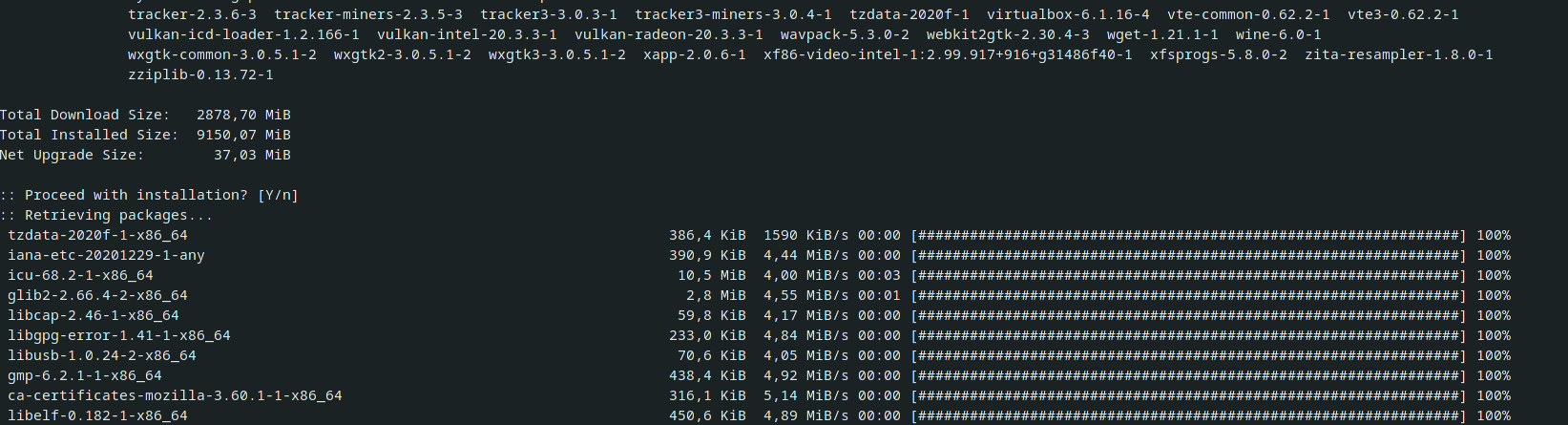
Why should one the instead of using a ? Simple answer from my side: The and I assume also other package managers may delete the symbolic link during the update process and create a new home directory instead. If you need to store your home data on another storage then your root partition, consider to… Continue reading
-
Business Client Software Solutions

I offer Business Software Solutions for organizations like , ‘s and . This means that I setup and maintain the software like applications and operating systems and take care on the security and maintenance. In the following a Business Computer Client is to be meant as a which an employee uses to work for an… Continue reading
2D, 3D, Android, Atom, autonomous data management solutions, Blender, Business Computer Client, Business Computer Client Solution, Business Computer Client Solutions, business data, Business Server, Business Server Software Solutions, Business Server Solution, Business Server Solutions, Cloud Solutions, club, Computer Client, computing device, cyberattack, Debian, desktop computers, Dia, diagrams, Dropbox, Eclipse, employees, encrypted, encrypted email communication, Enigmail, Environment, ERM, Gantt charts, GIMP, git, hardware, how to protect your passwords, IDE, Integrated Development Environments, IntelliJ IDEA, JetBrains, Kanban, KeePassXC, laptops, LibreOffice, LibreOffice Base, LibreOffice Calc, LibreOffice Draw, LibreOffice Impress, LibreOffice Math, LibreOffice Writer, LineageOS, Linux, Linux Distribution, Maintenance, Manjaro Linux, Microsoft Office, Microsoft Project, Microsoft Word, Mobile Devices, mobile phones, Mozilla Thunderbird, Nextcloud, NGO, non-govermental organization, Office Solutions, Operating System, organization, organization culture, password manager, PDF, Photoshop, presedence diagrams, Pretty Good Privacy, ProjectLibre, rolling release, root user, security, Security Solutions, seminars, Solutions for all Employees, Solutions for Designers, Solutions for Developers, Solutions for Project Managers, SSH, tablets, trainings, Transformation Process, Ubuntu, Unified Modeling Language, user experience, Version Control, Visual Studio Code, WireGuard, Workstations -
Business Server Software Solutions

My tool Server Manager which is based on allows me to setup and maintain business servers on a short amount of time. In the following service description business server is to be meant as a which provides all of the services which an organization needs. This includes , , , , , etc. Continue reading
Ansible, Big Tech, BigBlueButton, business, Business Server, Business Server Setup, Business Server Software, Business Server Software Solutions, Business Server Solutions, calenders, Cloud Storage, Cloud Storage Solutions, club, CMS, contacts, Content Management System, Continuous Integration, COVID-19, dedicated hosting service, Development Infrastructure, Development Infrastructure Solutions, docker, E-Commerce, E-Commerce Solutions, Education Software, Education Software Solutions, educational facilities, Exploit, finances, Gitea, Gitlab, Intelligence Agency, Internet Forum Solutions, Internet Forums, Jenkins, Jitsi, Joomla, Kanban, Knowledge Management, Knowledge Management Solutions, Kubernetes, learning platform, Linux, Magento, Mailserver, Mailserver Solutions, Mailu, Mediawiki, Microservices, mind map, Moodle, MyBBoard, National Security Agency, Nextcloud, Nextcloud Talk, non-govermental organization, NSA, Open Source, Pretty Good Privacy, Red Hat Enterprise Linux, REDAXO, Roundcube, scale up, security, Server, server cluster, Server Configuration, Server Manager, server storage encryption, surveys, tasks, Ticket System, TURN, TYPO3, Ubuntu, Ubuntu 16.04, Version Conrtol, video telephony, Videotelephony, Videotelephony Solutions, Virtual Private Network, Web Presence, Web Presence Solutions, whiteboards, WireGuard, Wordpress, Zammat